
Water Damage Restoration Farmington Hills
Water in the house does not wait, and neither do we. Call us and our Farmington Hills crew heads out with pumps, meters, and dryers. We run the water damage restoration from the first gallon out to the last board back in.
Standing water in your Farmington Hills home? Our crew pumps it out fast and dries it down right.
Water ExtractionStanding water pulled out fast, then dried right, by a local Farmington Hills crew.
Structural Drying & DehumidificationWet framing and subfloor dry from the inside out. We set air movers and dehumidifiers, then read the moisture every day until it is gone.
Flood Damage CleanupBasement underwater? Our Farmington Hills crew pumps out the water and dries your home down to the framing.
Get in touch with our crew in Farmington Hills
Tell us what is going on and we will walk you through the options. .
(248) 479-3871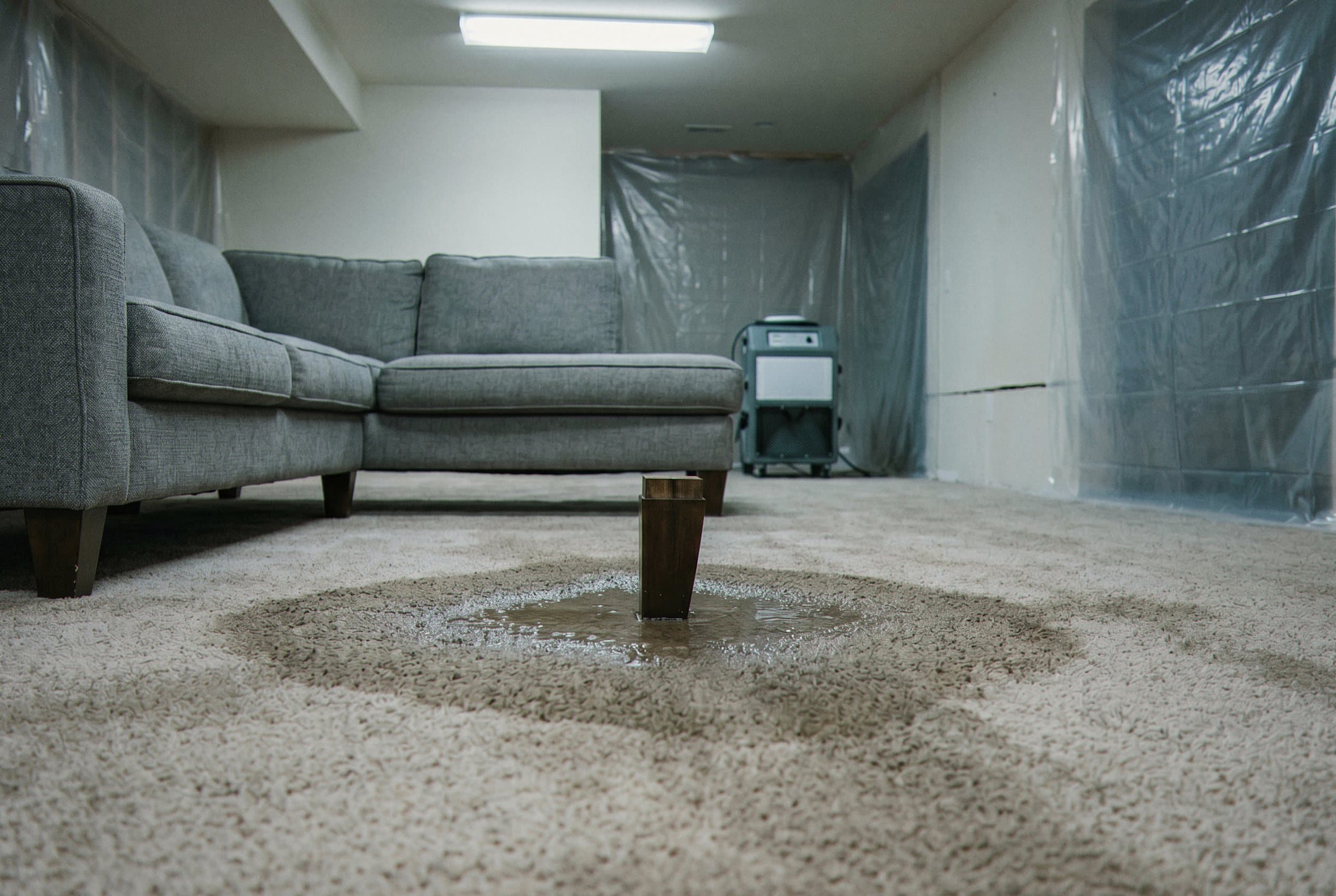
We pull the water out and dry the house down
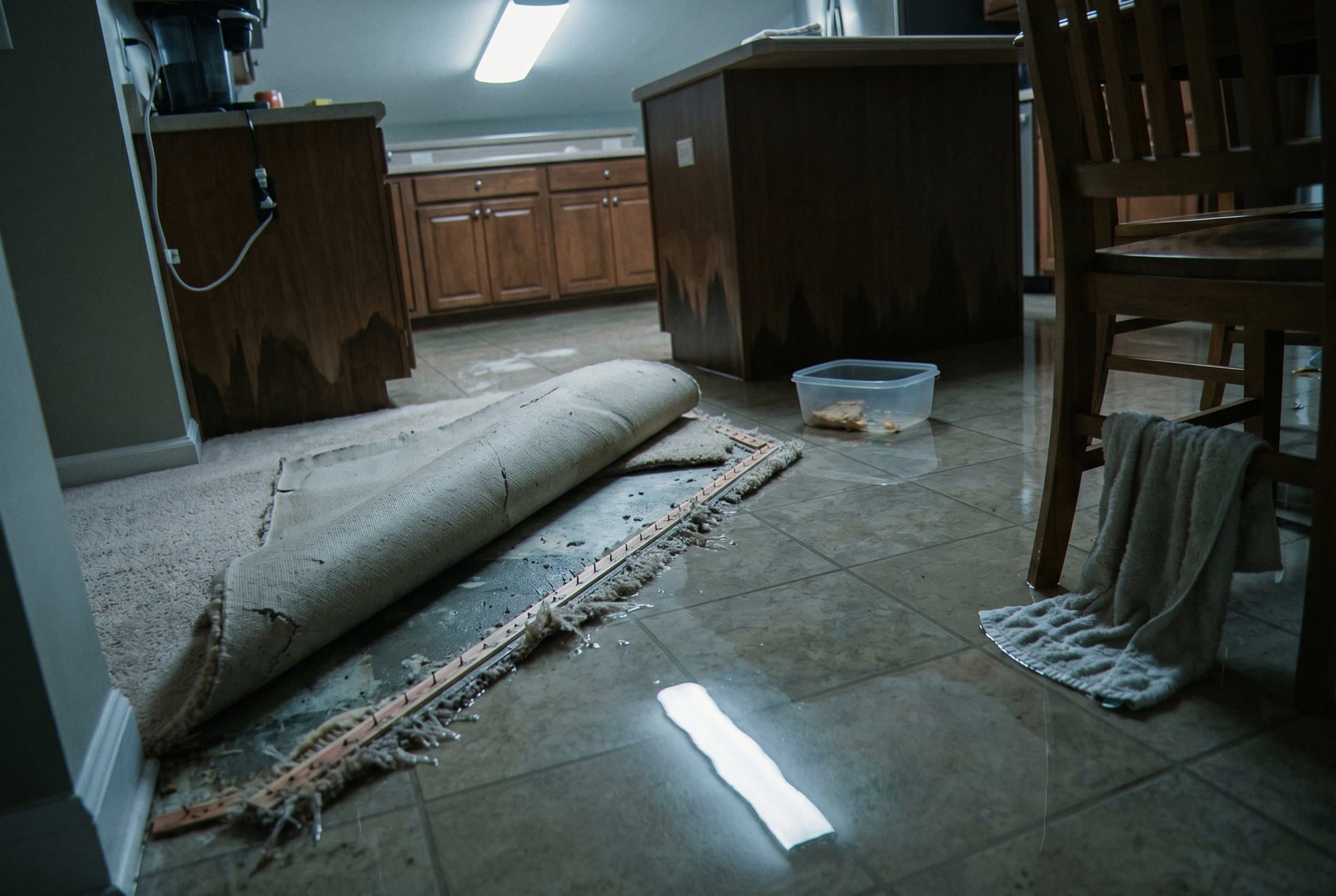
It usually starts small. A hose behind the washer splits, or a supply line under a sink lets go while you sleep. By morning the water has crossed the kitchen floor and is running down the basement stairs. Most homes here have full basements, so that is where all of it ends up. We get these calls year round from streets off Twelve Mile, Middlebelt, and Orchard Lake Road. Our crew loads pumps and hoses and heads your way. The first job is simple. Get the standing water out before it soaks anything else. Emergency Water Removal buys back the drywall, the trim, and often the flooring, because wet material can only sit so long before it is trash. While the pumps run, we look for the source and shut it down. Then we tell you in plain words what the water damage restoration will involve. No script, no pressure, just the plan and what it will take.
Pulling the puddle is the easy part. What you can see is maybe half of the problem. Water travels sideways under carpet pad, wicks up drywall, and slides along the top of floor joists until it finds a low spot. It gets under vinyl plank, into the seam where subfloor meets tile, and behind kitchen cabinets where no towel will ever reach. Our Water Extraction step goes after that trapped moisture with weighted wands and truck mounted vacuum. We map the wet area with a moisture meter first, so we know how far the water actually spread. Very often it runs several feet past the edge of the stain on the ceiling. Then we pull base trim, drill weep holes where a wall cavity is holding water, and lift what cannot be dried in place. Careful Water Extraction now is what keeps mold out of your house three weeks from now.
Standing water in your Farmington Hills home? Our crew pumps it out fast and dries it down right.
Water ExtractionStanding water pulled out fast, then dried right, by a local Farmington Hills crew.
Structural Drying & DehumidificationWet framing and subfloor dry from the inside out. We set air movers and dehumidifiers, then read the moisture every day until it is gone.
Water Damage Restoration Farmington Hills done right
Emergency Water Removal
Standing water in your Farmington Hills home? Our crew pumps it out fast and dries it down right.
Water Extraction
Standing water pulled out fast, then dried right, by a local Farmington Hills crew.
Structural Drying & Dehumidification
Wet framing and subfloor dry from the inside out. We set air movers and dehumidifiers, then read the moisture every day until it is gone.
Flood Damage Cleanup
Basement underwater? Our Farmington Hills crew pumps out the water and dries your home down to the framing.
Sewage Cleanup
A sewage backup is a health risk, not just a mess to mop up. We seal off the room, pump the waste out, and sanitize every surface it touched.
Burst & Frozen Pipe Cleanup
A pipe let go? We stop the water and dry your Farmington Hills home back out, fast.
What we handle in Farmington Hills
- Emergency Water Removal
- Water Extraction
- Structural Drying & Dehumidification
- Flood Damage Cleanup
- Sewage Cleanup
- Burst & Frozen Pipe Cleanup
Dry the structure, not just the floor
There is a cheap version of this work. A truck shows up, sucks the puddle, drops two fans in the room, and leaves the same afternoon. The floor feels dry to a bare foot, so it seems like the job is over. Three weeks later the paint bubbles above the baseboard and the room smells like an old basement. That is a wall cavity that never dried. Water damage restoration done right goes past the surface, into the framing, the insulation, and the concrete. We check those with meters instead of guessing. A reading either comes down or it does not, and if it does not, we change the drying plan and keep going until it does.
Time is the one thing nobody gets back on these jobs. Wet drywall can often be saved on the first day. After a couple of days it is usually coming out. Carpet pad is almost always gone, though the carpet itself may be fine if we reach it early enough. Solid wood floors cup within hours and can sometimes flatten back out with the right drying mat setup, which is a good save when it works. So we move. The fastest thing you can do is call while the water is still on the floor. Not after the weekend, and not after you have run a shop vacuum for three days hoping the room dries on its own. One more thing about timing. Mold does not need a week to get going. Under the right warmth it can start inside a couple of days, and a closed basement in August is exactly the right warmth. That is the real clock on these jobs, not the carpet.
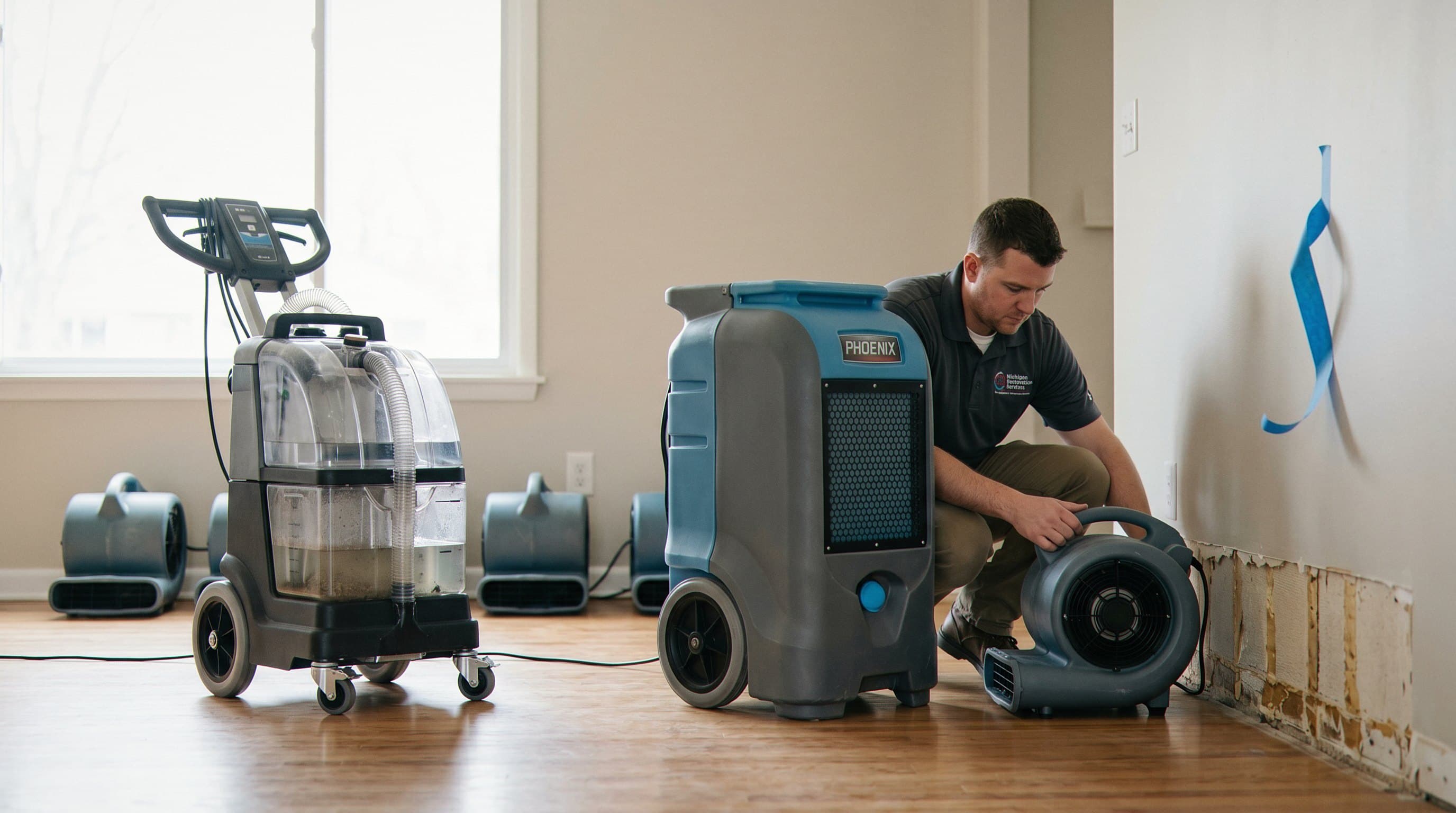
Getting water out is a physical job, and it is mostly about how much you can move before it soaks in. A gallon still in the pad is a gallon the dehumidifier never has to pull out of the air. So we spend real time on Emergency Water Removal and on slow, deliberate Water Extraction passes over the same carpet, until the wand comes up clean and dry. Then we count the room. Square footage, the wet materials, and how much air the space needs decide how many movers and dehumidifiers go in. Guessing at that number is why some jobs never fully dry, and why a homeowner ends up calling somebody else in a month.
Structural Drying & Dehumidification runs on numbers, not on a feeling. Each visit we log the temperature, the humidity in the room, what the machines are pulling out of the air, and the meter readings from the wet materials. That log tells us whether the plan is working. It also gives you a clean record for the claim, which matters more than most people expect until an adjuster asks what the readings were on day two. We take photos before we touch anything, during demolition, and again at the end. You get the paperwork, not just a verbal summary at the door on the last day.
Some of our calls are not a flood at all. It is a stain on a ceiling that has grown a little each month, or a water bill that jumped for no reason anybody can find. Water Leak Detection is quieter work than a water damage restoration after a burst line. We use moisture meters, thermal imaging, and sometimes a listening device on the supply lines to find the source before anyone opens a wall. Slow leaks do the same damage as a burst pipe, only over months instead of minutes, and they usually bring mold along with them. Finding one early is the whole game.
We know the housing stock here. Much of Farmington Hills is ranches and colonials built between the fifties and the eighties, with block or poured basements and clay soil pressing against them. Water finds the cold joint where the wall meets the floor. Newer builds out toward Halsted and Twelve Mile have their own habits, usually finished basements with carpet over concrete and a lot of stored belongings that have to move before we can work. Older sections near Grand River and Farmington Road often have basements that were finished decades ago, and that paneling behaves nothing like modern board when it gets wet. Panel and furring hold water against the block and hide it well. We open those walls rather than guess at them. We cover Farmington, West Bloomfield, Novi, Southfield, Livonia, and Redford as well, so very little about these houses surprises us anymore.
Finished basements are the hard ones in this town. Plenty of families here put real money into the lower level, with carpet over concrete, a bar, drywall on furring strips, and shelves of stored boxes along the back wall. When two inches of water crosses that floor, the carpet is the least of it. Water climbs the drywall a few inches and stops, so we cut a clean line above the wet edge and pull the insulation behind it. The furring strips and the plate under them have to dry, which means the wall stays open for a few days. Boxes sitting on the floor are usually the worst loss, because cardboard drinks water and the contents follow it. We move what can be saved to a dry part of the house and tell you honestly what is finished. Then we dry the slab. That takes longer than people expect, because concrete gives up its moisture slowly and will fool a hand test for days.
Smell is the last thing to leave. Even on a clean water loss, damp carpet in a closed basement sours within a day or two, and that odor sits in the fibers and the pad. So cleaning is part of the water damage restoration, not an extra line at the end. We clean the hard surfaces, treat what needs treating with products rated for the material, and keep air moving until the room smells like a room again. On a sewage job that step is much larger, and it follows the guidance the EPA publishes on handling contaminated water inside a home. We would rather remove a material than pretend to save one we cannot truly clean. That call gets made in front of you, with a reason attached. It never gets made quietly out at the truck.
Through the whole job you talk to the same people. We tell you what we are doing before we do it, and we say plainly when something cannot be saved. If a run of cabinets has to come out, you hear that on day one and not on day five. That is the water damage restoration we would want in our own houses. Answer the phone, show up, dry it properly, put it back, and leave the paperwork behind. Call us and we will get it started today.
How a water damage restoration job goes
Your inquiry
Call or send the short form with what is going on at your place. A sentence or two is plenty for the first step.
We talk it through
We go over the situation on the phone, ask the questions that matter, and tell you what we would do next.
A clear plan
You get a plain-language rundown of the work, the order it happens in, and what to expect on the day.
The work gets done
Our crew shows up when we said, does the job, and walks you through the result before leaving.
Water on the floor right now? Call and we will get a crew rolling.
Tell us what is going on at your Farmington Hills home and we will walk you through the options. One call or one short form is all it takes.
Call (248) 479-3871Make your inquiry
Looking for help at a Farmington Hills home? Send the short form and we get back fast during open hours: .
Start the formQuestions we hear in Farmington Hills
Straight answers first. If yours is not here, call (248) 479-3871 and ask.
How fast can you get to my Farmington Hills home?
What should I do first?
Will you work with my insurance?
How long does the drying run?
Is mold going to be a problem?
Is the water clean?
Water on the floor right now? Call and we will get a crew rolling.
Tell us what is going on at your Farmington Hills home and we will walk you through the options. One call or one short form is all it takes.
Call (248) 479-3871Make your inquiry
Looking for help at a Farmington Hills home? Send the short form and we get back fast during open hours: .
Start the form