How we dry a Farmington Hills home down to the framing
Pulling standing water off the floor is only the start. The water you cannot see soaks into wood, plaster, and insulation, and it can sit there for weeks. That trapped moisture is what warps a floor, swells a door frame, and feeds mold behind a clean looking wall. Our crew dries the parts of your home you never get to see, and we stay at it until the readings come back dry.
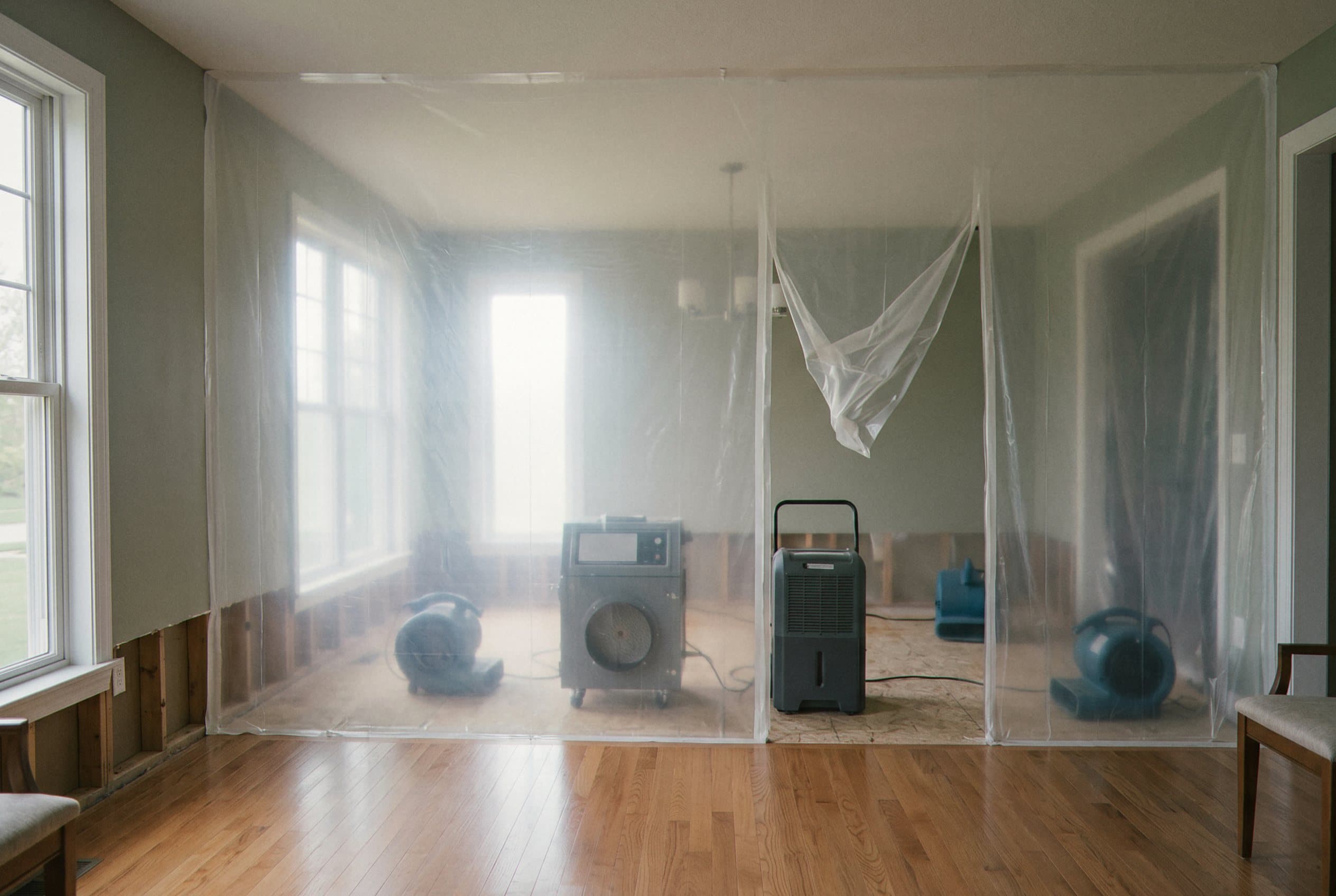
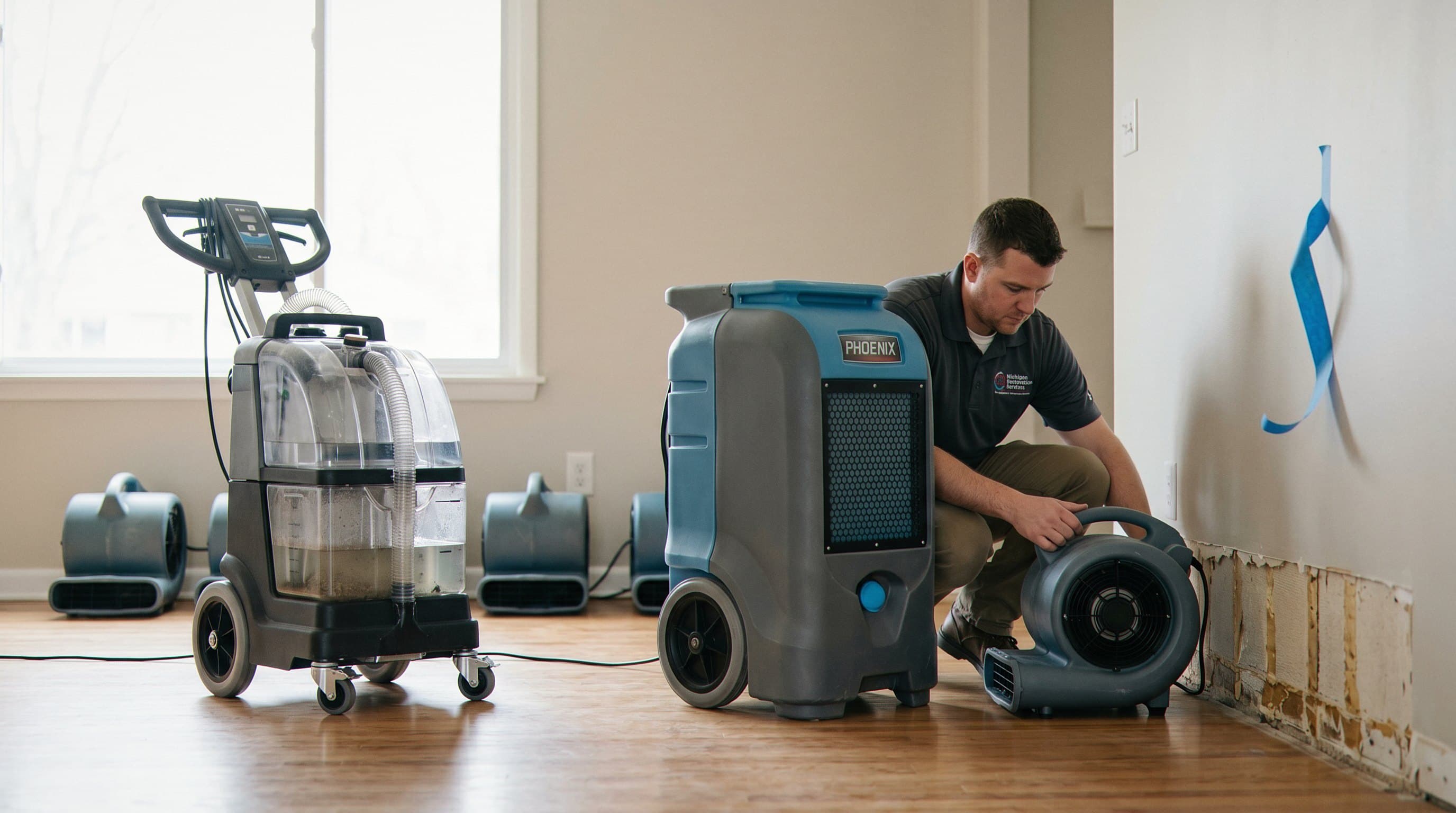
We start with a full moisture map. Using meters and a thermal camera, we find every damp pocket in the room and mark how wet each one is. Those first numbers become our baseline. From there we place air movers to lift moisture off surfaces and dehumidifiers to pull it out of the air. The two work as a pair. One without the other just moves the problem around.
- We map every wet pocket with meters and a thermal camera before a single fan goes down.
- Air movers and large dehumidifiers run together so moisture leaves the room instead of shifting to the next wall.
- We check the numbers every day and adjust the setup as the framing gives up its water.
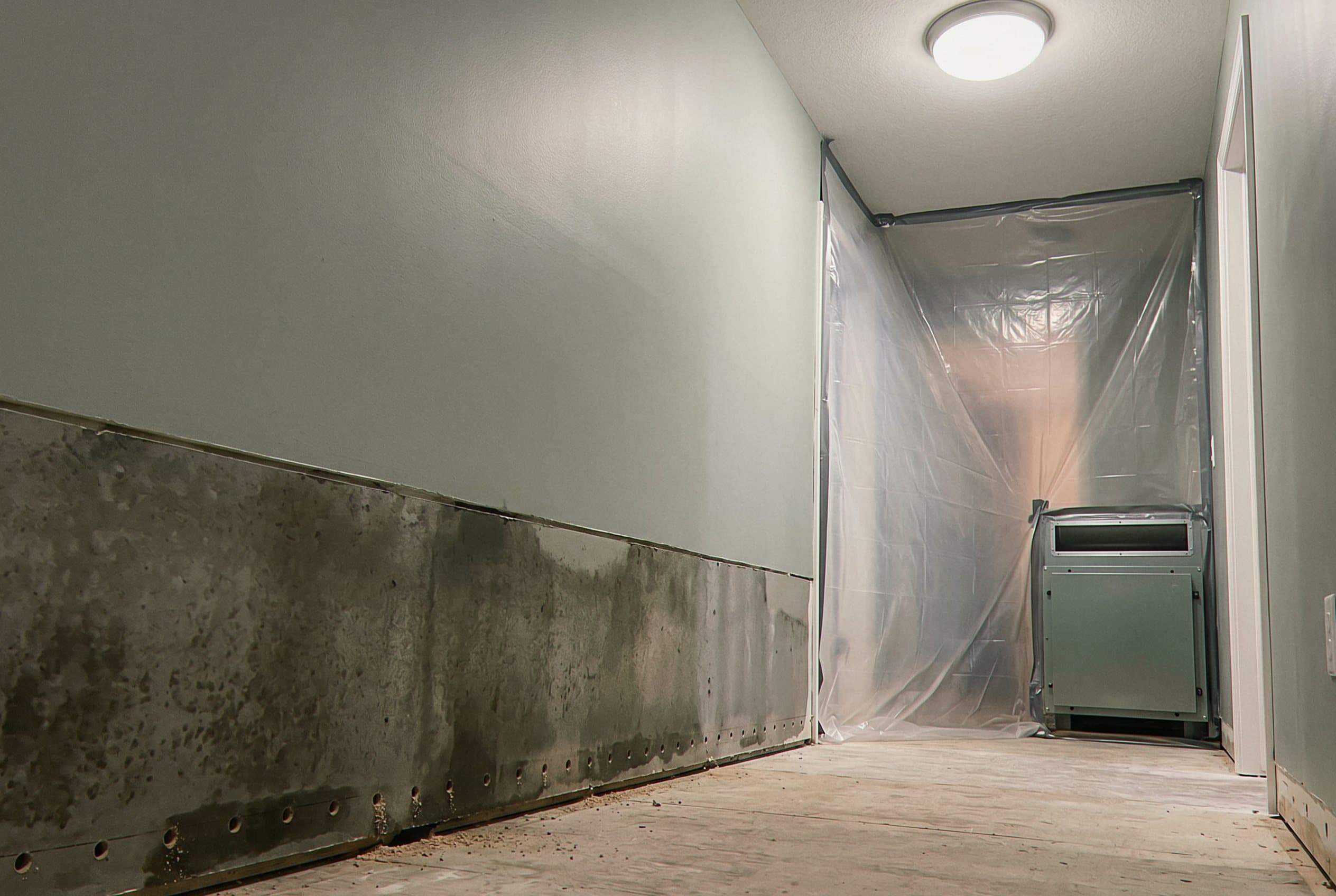
- Drying in place saves sound drywall and trim, so you tear out less and rebuild less.
- You get the final dry readings in writing, proof the job is truly finished.
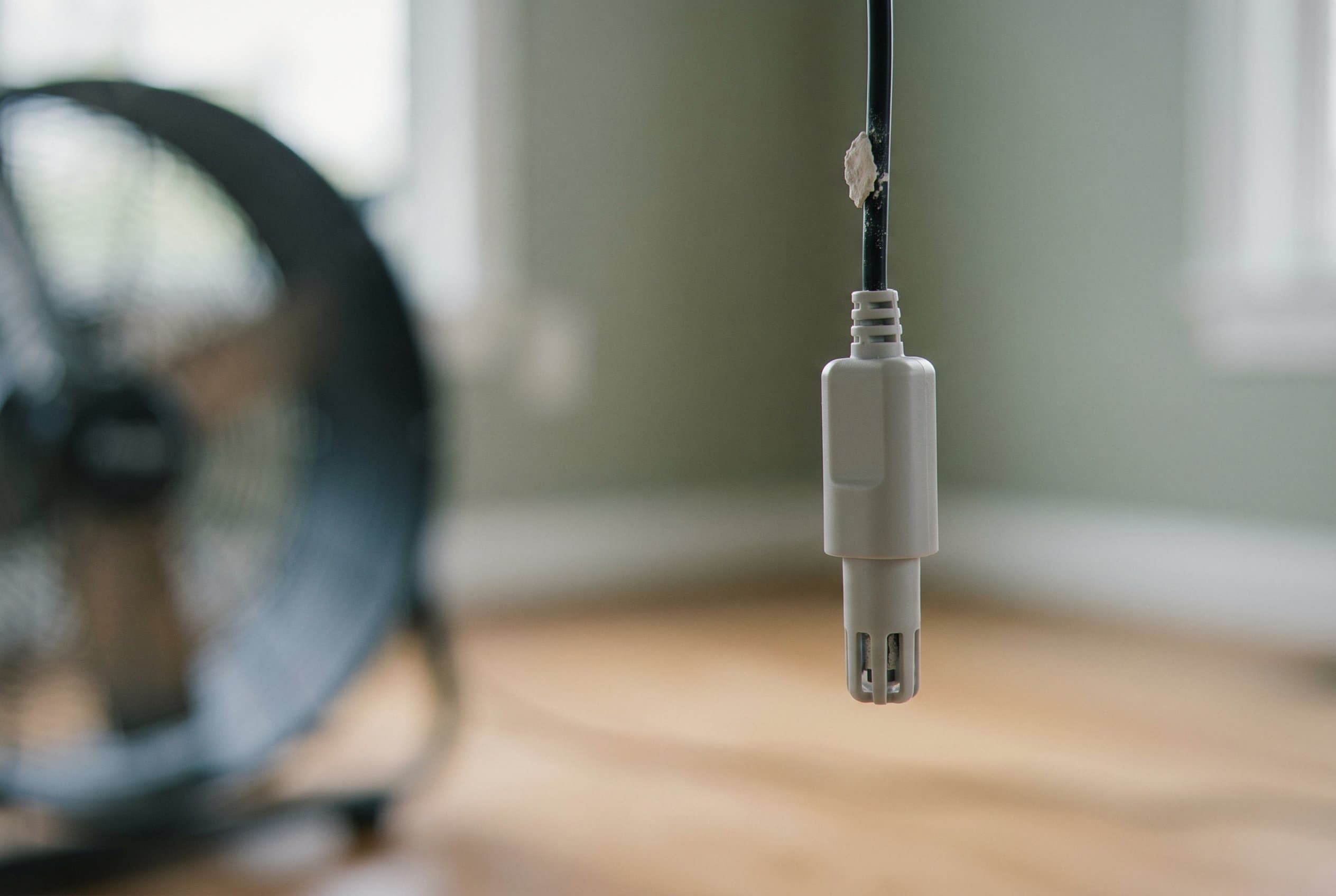
Drying is not a guess. We log temperature, humidity, and moisture each day, and we compare every reading to a dry goal taken from the same material in a part of the home the water never touched. When the wet areas match that goal, the structure is dry. That paper trail matters if you file with your insurer, since the adjuster wants to see that the home reached a clear dry standard, not just that it felt dry to the touch.
A floor that feels dry on top can still be soaked underneath, and that is where the slow damage starts. If you had a leak, a backup, or a flood in Farmington Hills, let us read the moisture before you close the wall back up. Call us and our crew will get the drying started today.