
Water Damage Repair & Reconstruction · Farmington Hills

Water Damage Repair and Reconstruction in Farmington Hills, MI

Drying the house is only half the job. Once the water clears, we fix the rooms it wrecked and rebuild what it tore out. Our crew carries the work from bare framing to the last coat of paint, in homes all over Farmington Hills.

Free Quote

Free Water Damage Repair & Reconstruction quote.

We reply within 1 business hour. No spam, ever.

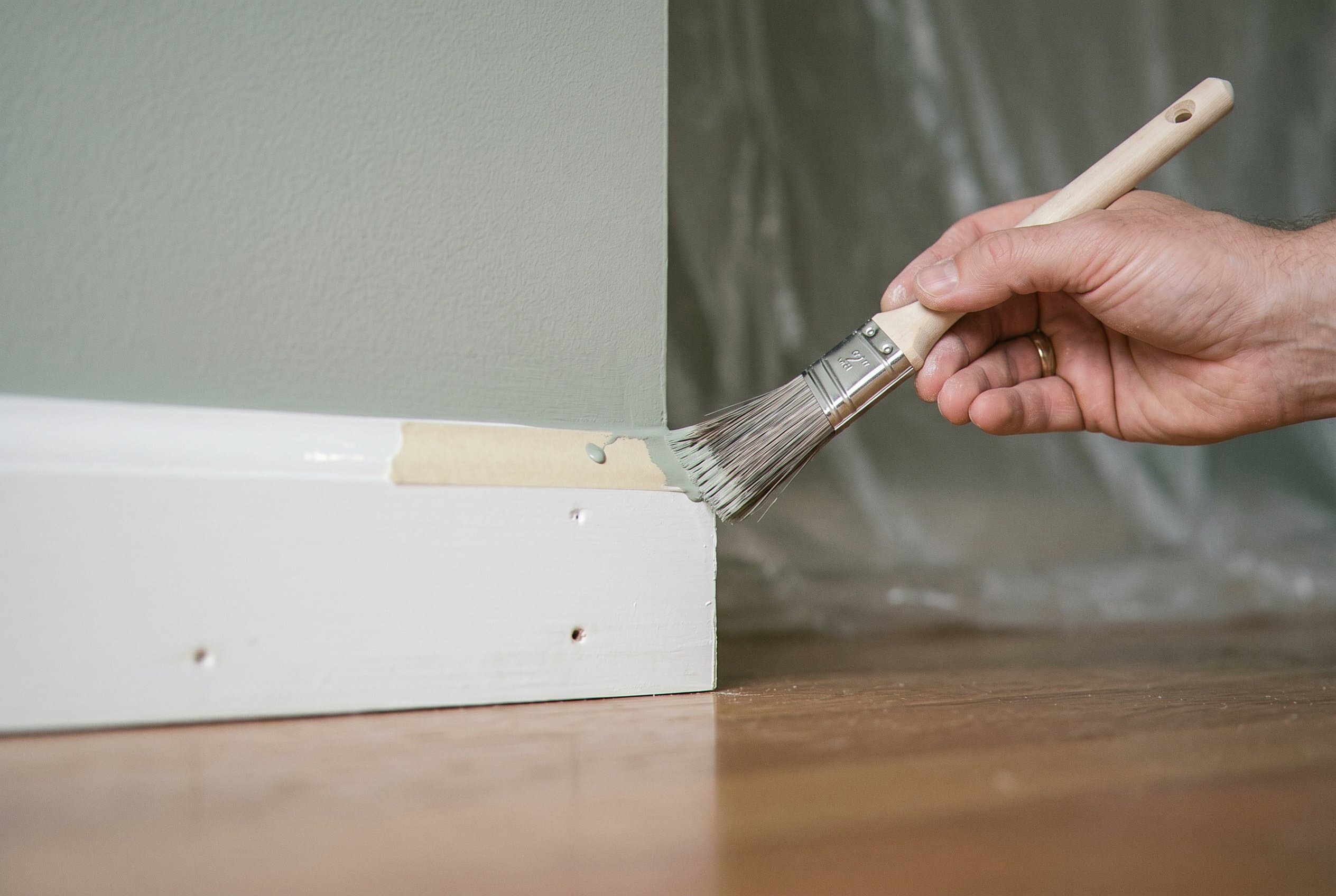
Fresh drywall and paint in room.
Warped drywall with water staining.
New drywall patches matching wall.
What we do

We rebuild the rooms the water ruined

When the water drains, the wreckage stays. You see it in the swollen baseboards, the brown stains that crawl up the wall, and the hardwood floor that cupped and lifted and will not lie flat again. A dry house full of ruined rooms is still a long way from livable, and that gap is exactly where we go to work. Some of it you can spot from the doorway. The rest waits behind the drywall and under the subfloor, where a quick glance misses it. Our crew takes on the whole rebuild, so you walk back into finished rooms instead of a gutted shell. We work in homes all over Farmington Hills. We treat each one the way we would treat our own.

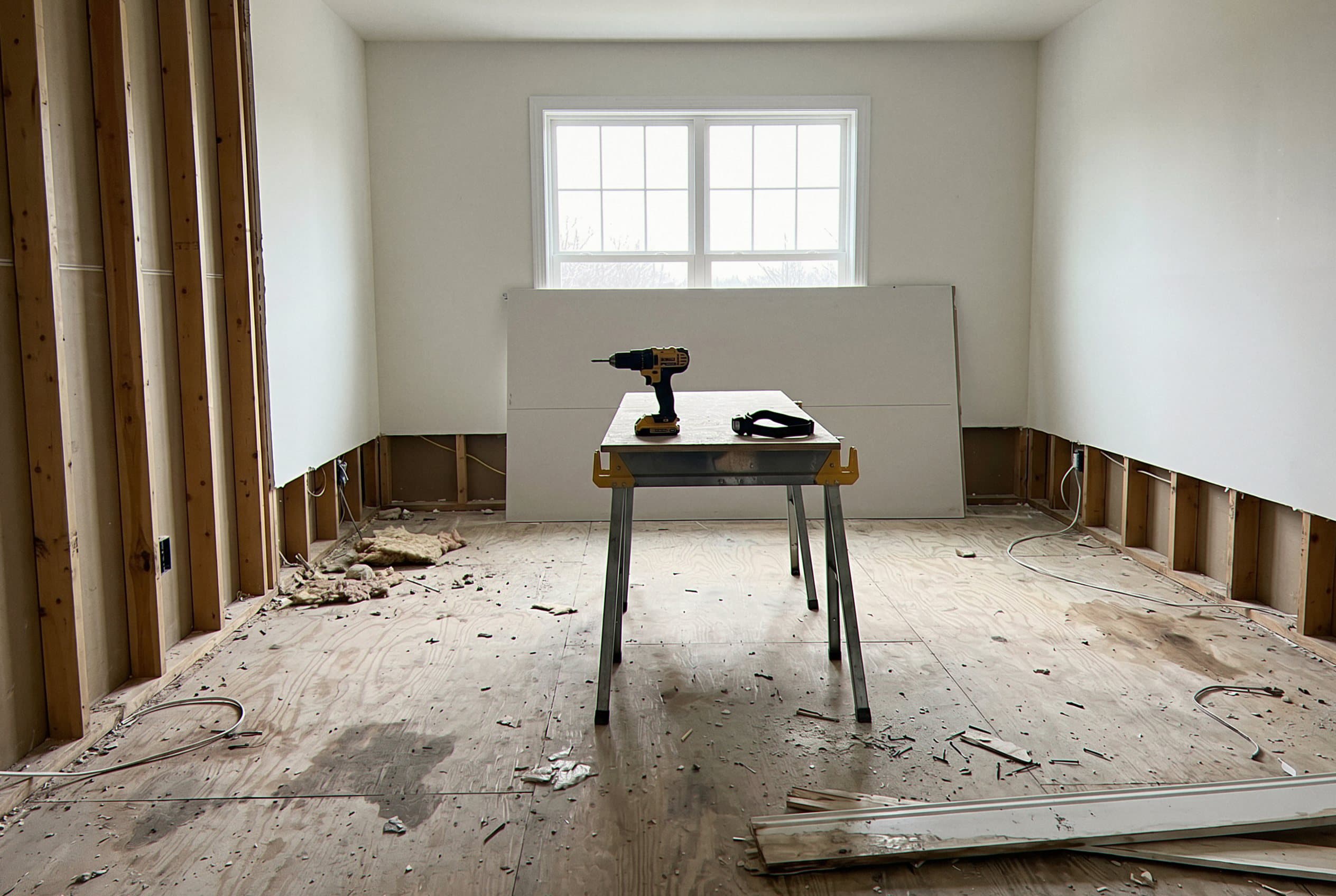
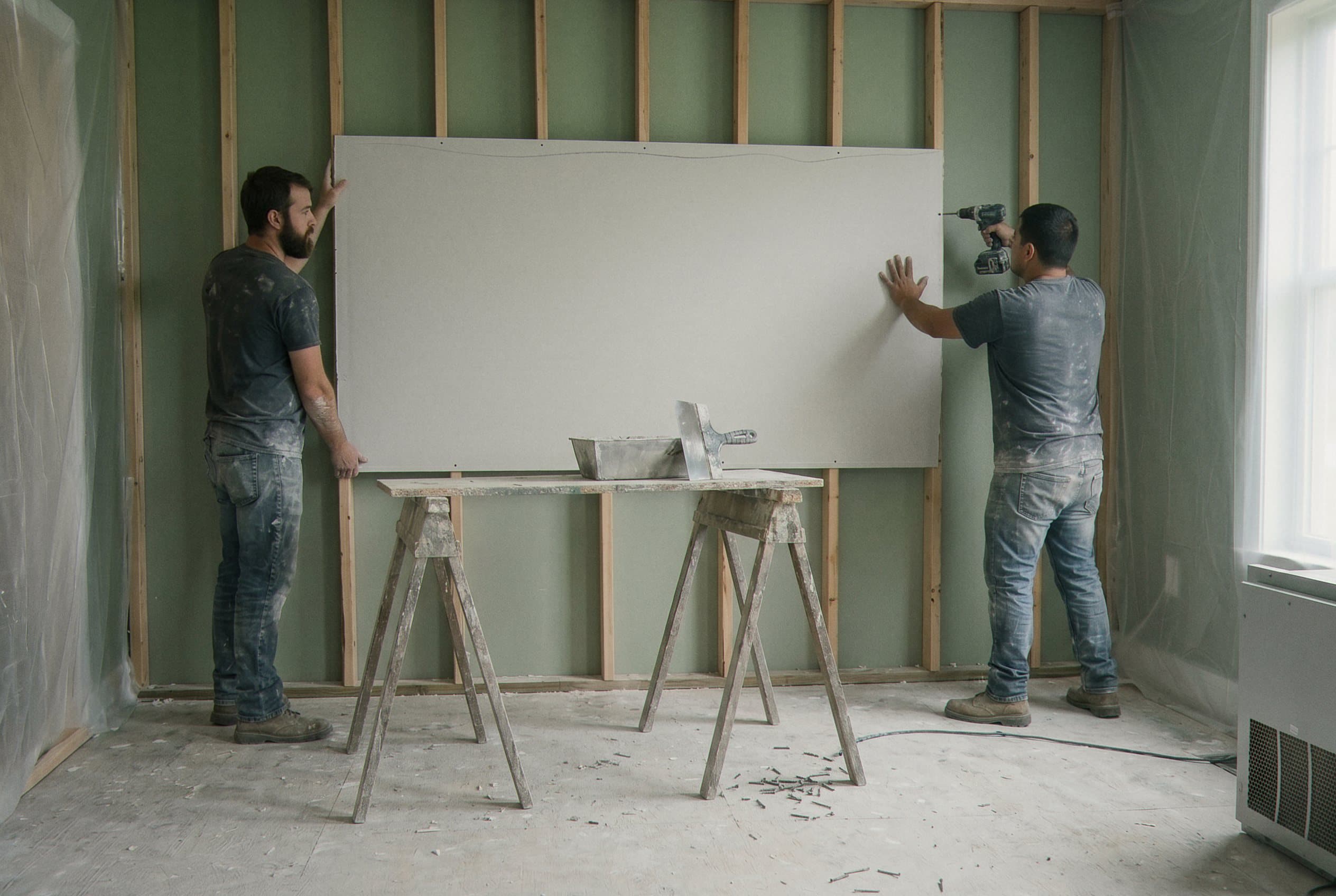
We start by pulling out everything the water reached and weakened. Most of the time that means soaked drywall, soggy insulation, a warped subfloor, swollen baseboards, and trim that has to come out. Then the building begins. We frame fresh wood where the old studs gave way, then we hang and tape new drywall, prime it, and roll on the paint. Ceilings that sagged or stained get cut back to solid framing and rebuilt the same way. Last comes the flooring and the trim, cut to blend into the rest of the house. Each task lands in the right order. You watch the room come back one piece at a time, and nothing gets buttoned up before the step under it is right.

  • We haul off the ruined materials and sweep up the mess, so you are not left cleaning up after a flood on top of everything else.
  • We match new drywall, trim, and flooring to the rooms the water never touched, so the repair seems to vanish into the rest of the house.
  • One crew handles the whole job. We carry it from the first cut of demolition to the last stroke of paint, with no gap where the work stalls and no new face to bring up to speed.
  • We photograph the damage as we go and write down what we pull out, room by room, which hands you a clear record for your insurance adjuster.
  • We tell you what is happening at each stage, so you always know the plan, the order, and what comes next.
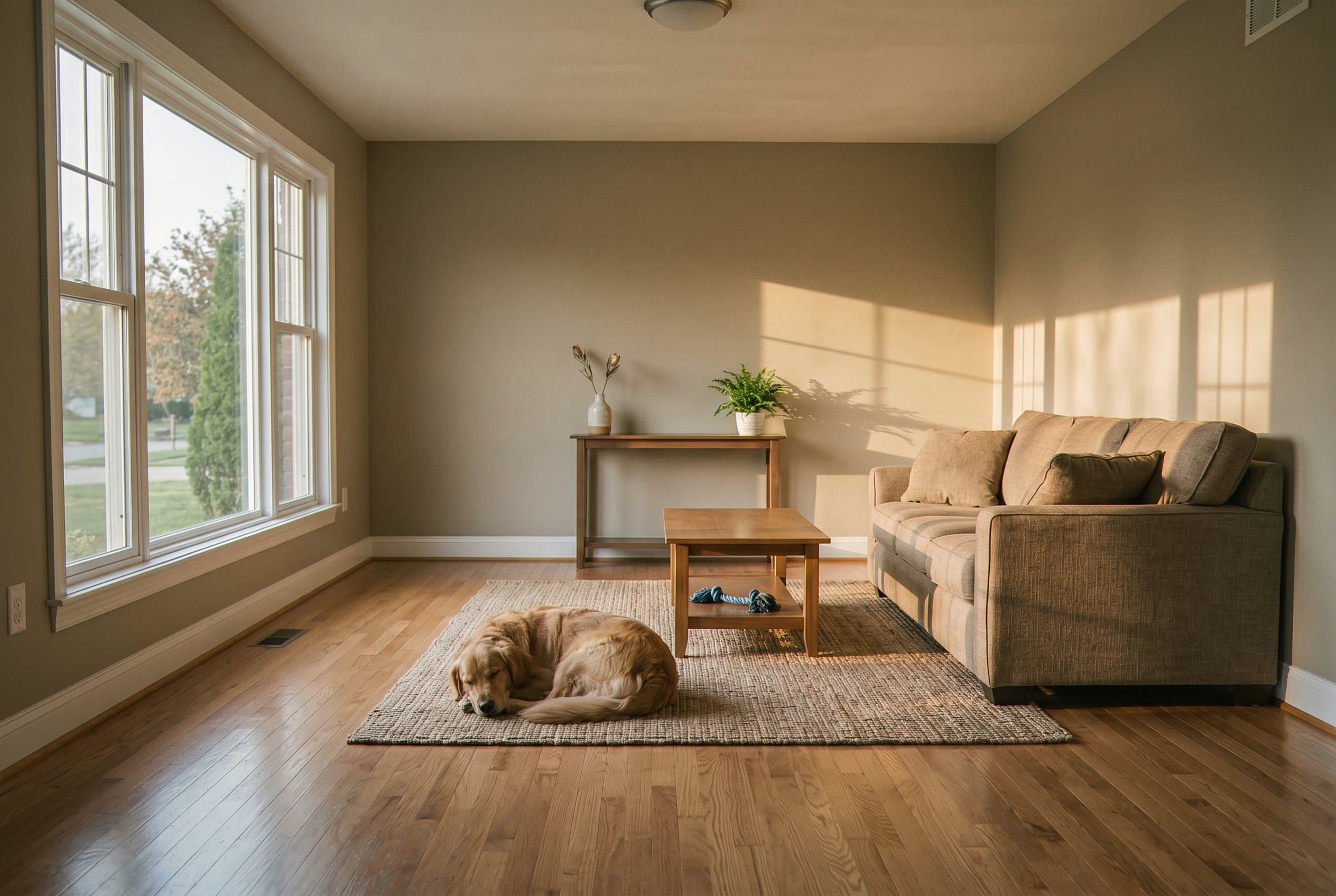
We do not dry your home and walk away. We rebuild it until the room looks like the water never got in.

Water hides where you cannot see it. It runs behind the walls, slips under the floor, and soaks into the framing that holds the room up. So we look before we close anything back in. We check moisture in the studs and the subfloor, not just the surface that already dried. If a beam stayed wet, or if mold started to spread along a stud while the room sat damp, we stop and handle it right then and there. We will not seal trouble inside a fresh wall and call it done. That habit follows the drying standards the IICRC sets, and it keeps a small fix from turning into a costly one down the road.

When a leak, a flood, or a burst pipe tears through your home, you want one crew to carry the job the whole way. We rip out the damage, rebuild the rooms, and answer the phone when you call. There is no runaround and no waiting on a callback that never comes. If you live in Farmington Hills and need water damage repair, reach out today and we will get started.
Materials

What comes out, and what goes back in

Water does not treat every building material the same, and that decides what we can save. Drywall drinks water straight up through the paper face and the gypsum behind it, so a wall can read wet two feet above the line the flood left. Once the core softens it crumbles under your thumb, and no amount of drying brings that strength back. Fiberglass insulation slumps in the cavity and holds water against the framing for weeks. Baseboard and casing made from pressed board swell at the cut ends and never close back up tight. Solid wood trim often lives if we pull it early and stack it flat to dry. Framing lumber is the tough one, in the best way. Studs and joists usually dry out fine once we open the cavity and move air through it, so most of the bones of your house stay right where they are.

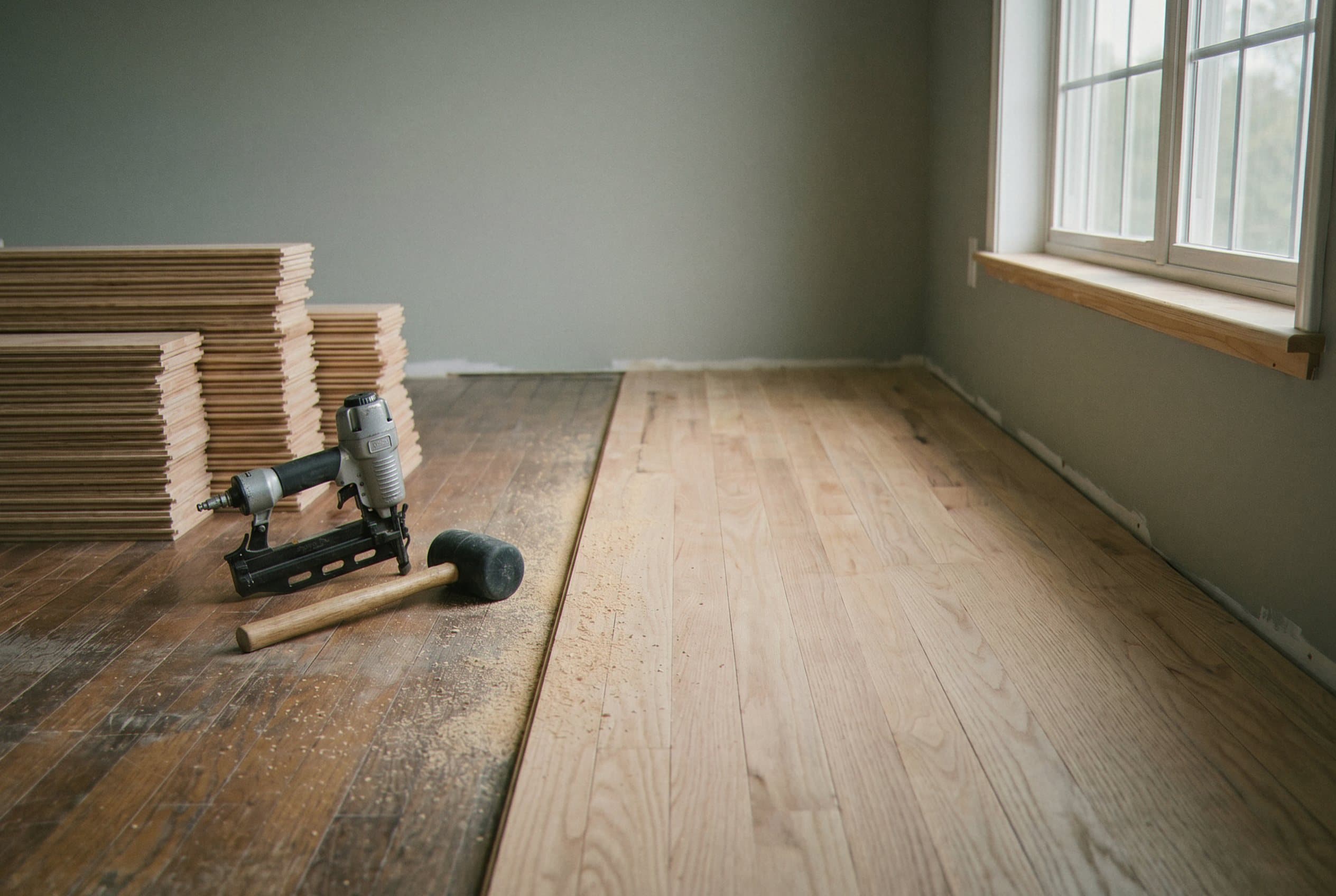
What we put back gets picked to match the room you had, and to hold up if that room ever gets wet again. New drywall goes in at the same thickness, taped and floated so the seam vanishes under paint. In a bath or a laundry room we set moisture resistant board on the lower courses instead of the standard sheet. Insulation goes back as fresh batts, because wet batts never get their loft or their R-value back. Flooring we talk through with you. Solid hardwood can sometimes be sanded flat again once the subfloor reads dry, and a few boards can be woven in so the grain runs unbroken across the room. Plank and laminate that swelled at the seams get replaced, since the core under that top layer is pressed board and it is finished. Trim gets cut fresh, primed on every side, and painted to blend into the rest of the run.

  • Wet drywall wicks water high above the flood line, so we cut back to board that reads dry.
  • Fiberglass batts hold water against the studs, so they come out and fresh batts go in behind the new wall.
  • Framing lumber usually dries in place, which means most of your house stays right where it is.
  • Pressed board trim swells at the ends and will not close back up, so we cut new stock to match.
Drywall saw cutting damaged section.
Exposed framing ready for insulation.
What about the alternatives?

Ways people handle the rebuild

Once the house reads dry, you have a few real choices about putting it back. Here is how each one tends to go in a Farmington Hills home.

One crew for the drying and the rebuild

The crew that opened the wall already knows what is behind it, so nothing gets lost in a handoff and the repair starts the day the meters read dry.

Recommended

Cutting drywall back to a clean line above the damage

It costs a little more board and pays for itself in the finish. We take the wall to a straight seam over solid framing, so the patch lands where a joint belongs and the wall reads flat under raking light.

Recommended

Replacing a whole floor instead of a section

Sometimes the honest answer, mostly when a plank product is out of production and nothing on the market blends with it. On a solid hardwood floor it is often more than the room needs.

Acceptable

Painting a stained ceiling without opening it

This works only when the meter says the cavity above is dry and the insulation stayed dry. Otherwise you are painting over a problem that bleeds back through the new coat within a month.

Acceptable

Screwing new drywall over the wet board

It hides the stain for a season. The old gypsum stays soaked in the cavity, mold takes the paper, and two layers come out instead of one.

Skip

Rebuilding before the moisture readings come down

Fresh trim and paint on damp framing traps the water inside the wall. The finish work fails, and the room gets torn open a second time.

Skip
How it goes

From quote to walk-on, fast.

01

Your inquiry

Call or send the short form with what is going on at your place. A sentence or two is plenty for the first step.

02

We talk it through

We go over the situation on the phone, ask the questions that matter, and tell you what we would do next.

03

A clear plan

You get a plain-language rundown of the work, the order it happens in, and what to expect on the day.

04

The work gets done

Our crew shows up when we said, does the job, and walks you through the result before leaving.

Before you book

What people ask before we start the rebuild

The same questions come up in almost every kitchen we stand in after a loss. Here is how we answer them.

Can you match my paint and my floor?
Most of the time we get close enough that a guest never picks it out. Paint we match from a chip off your own wall, and we roll the whole wall or the whole run rather than blotting a patch in the middle. Flooring depends on what you have. A plank still in production we can usually order. A discontinued one we cannot, so we talk through options, like pulling material from a closet to fill the room you look at and setting the new product where nobody looks.
How long until my kitchen works again?
That rides on how much came out and what has to be ordered. A single wall and a strip of trim can be done in a few days. A kitchen with cabinets, counters, and flooring runs longer, mostly waiting on what ships from the supplier. We hand you the order of the work up front and tell you which day each trade is in the house, so you can plan around it.
Do I have to move out while you work?
Often no. We seal the work area off with plastic and run dust collection so the rest of the house stays livable. If the kitchen or the only bathroom is out of service, or the work reaches the electrical panel, we will tell you straight that a few nights elsewhere makes more sense.
Will my insurance cover the rebuild?
That call belongs to your carrier, not to us, and we will not pretend otherwise. What we can do is hand the adjuster what they need to say yes. We photograph every room before we cut, keep a written list of what came out, and write the scope in the terms an adjuster reads. Most fights we watch come down to thin paperwork, so we keep ours thick.
Why are you opening more wall than I expected?
Because the meter says the material behind it is still wet, or because the cut has to land on a stud to hold the new board. A patch floating between framing sags and cracks along the seam. When we go past what you expected, we show you the reading or the wet framing that made us do it.
Can I do part of the work myself?
Plenty of people paint their own rooms, and we are glad to hand the job back at that stage. Tell us early so we prime the walls and leave them ready for your roller. Where we push back is on anything that closes a cavity, because once the board is up nobody can read what sits behind it.
Aftercare

Keeping the rebuilt rooms dry through a Michigan year

A rebuilt room only stays nice if the water that ruined it never comes back. In Farmington Hills that usually means the basement, because the clay soil under Oakland County holds water and every spring thaw and heavy summer storm pushes it toward the foundation. When we wrap up a rebuild we walk the outside of the house with you and look at the grade, the downspouts, and the window wells. Then we go back in and look at the sump pit, the water heater, and the hoses behind the washer. None of that takes long. It is far cheaper than opening the same wall twice.

  • Run every downspout well away from the foundation, and check that the ground still slopes away from the house.
  • Clear the gutters each fall. A clogged run pours straight down the siding and finds the sill plate.
  • Pour a bucket of water into the sump pit and watch the pump kick on, then shut off.
  • Put a backup on that pump if your basement is finished, because the worst storms take the power with them.
  • Swap the rubber washer hoses for braided steel.
  • Set a drain pan under the water heater, and know how old that tank is, because most of them let go with no warning at all and dump the whole load onto the floor.
Room restored with trim and paint.
FAQ

Water damage repair questions, answered

How fast can you get to my Farmington Hills home?
Someone answers whatever time it is. We will not put a minute number on it, because the honest version is that a heavy rain night has every restoration crew in Oakland County out at once. What we will do is tell you when we are leaving, and get your water shut off while you wait.
What should I do first?
Shut the main valve if you can reach it without wading. Leave the breaker panel alone unless you can get to it dry. Photograph the rooms before anyone starts carrying things out, and lift furniture off wet carpet if it is light enough to move.
Will you work with my insurance?
We keep the file adjusters ask for. Daily moisture logs, photographs by room, and a written scope of everything removed and everything dried. We talk to the adjuster ourselves. We will not tell you what your policy covers, because that is your carrier's determination and not ours.
How long does the drying run?
Three to five days is typical. Basement concrete, and the framing behind finished walls, hold water longer than open studs do, so a finished lower level can run past that. We take readings daily against the IICRC dry standard, and the equipment leaves when the material reads dry rather than when it looks dry.
Is mold going to be a problem?
It becomes one after roughly 24 to 48 hours of material staying wet. That number drives everything we do on the first day. Handled quickly, most water losses never turn into a mold job at all.
Ready when you are

Let's make your next steps easier

Tell us what is going on at your Farmington Hills home and we will walk you through the options. One call or one short form is all it takes.

Call (248) 479-3871Make your inquiry
CallContact us